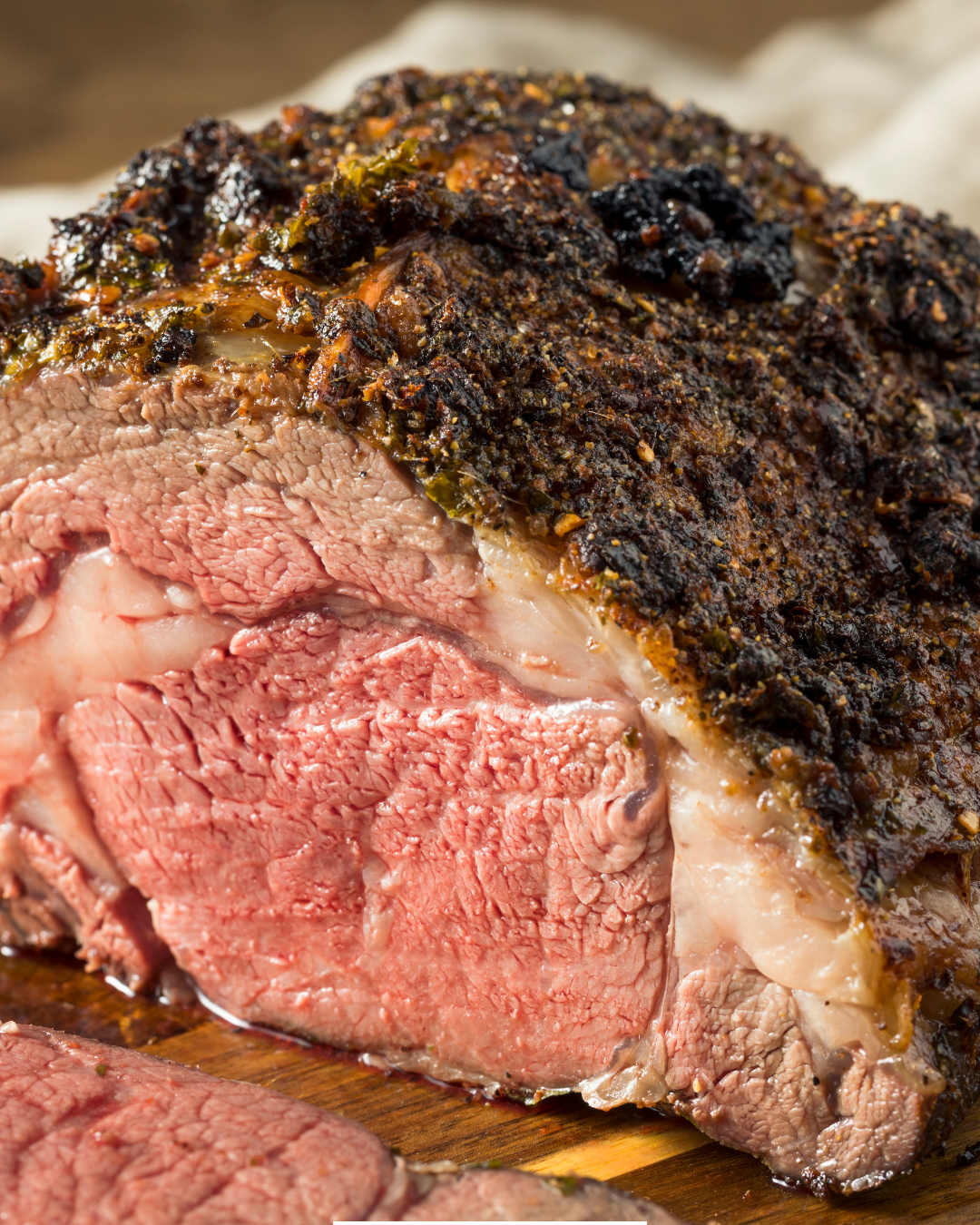
When it comes to sourcing the perfect cut of meat, Costco Prime Rib Roast is my go-to. It’s high-quality, reliably fresh, and perfect for impressing even the most discerning dinner guests.
Table of Contents
How to make Costco Prime Rib Roast
A Costco Prime Rib Roast is the ultimate centerpiece for any special meal. With proper seasoning, cooking techniques, and a little patience, you can turn this premium cut of beef into a juicy, tender, and flavorful masterpiece.
Ingredients
For the Roast:
- 1 Prime Rib Roast (Costco sells Prime or Choice Grade, bone-in or boneless)
- 2–3 tablespoons olive oil or melted butter (for rubbing the roast)
- 3–4 cloves garlic, minced or sliced
- 2–3 sprigs fresh rosemary, finely chopped
- 2–3 sprigs fresh thyme, finely chopped (optional)
- Kosher salt (generous amount)
- Freshly cracked black pepper (generous amount)
For the Optional Herb Butter:
- 4 tablespoons unsalted butter (softened)
- 1 teaspoon minced garlic
- 1 teaspoon chopped rosemary
- ½ teaspoon thyme
- ¼ teaspoon salt
Optional Side Additions:
- Beef stock (to deglaze or create a base for au jus)
- Red wine (for deglazing or sauce)
Instructions
Step 1: Prepare the Roast (1–2 Days Ahead)
- Take the Prime Rib Roast out of the plastic packaging and place it on a wire rack over a sheet pan.
- Pat it completely dry with a paper towel.
- Generously rub kosher salt all over the roast, including the sides. Use about ½–1 teaspoon of salt per pound of meat.
- Leave the roast uncovered in the refrigerator overnight or for up to 48 hours. Dry aging also helps build an incredible crust!
Step 2: Season the Roast (Day of Cooking)
- Bring the Roast to Room Temperature: Take the roast out of the fridge at least 2 hours before cooking. This ensures even cooking.
- Season Generously: Rub olive oil or melted butter all over the roast. If using herb butter, mix the butter with garlic, rosemary, and thyme, and spread a thin layer across the meat.
- Sprinkle freshly cracked black pepper on all sides. Adding salt here is optional since the roast has already been dry brined.
Step 4: Roast at High Heat
- Preheat your oven to 450°F (232°C).
- Place the seasoned roast on a roasting rack in a large pan, bone-side down if bone-in.
- Roast at 450°F for 20–25 minutes to create a nice crust.
Step 5: Slow Roast at Lower Heat
- Lower the oven temperature to 325°F (163°C).
- Continue cooking until the internal temperature reaches your desired doneness:
- Rare: 120–125°F
- Medium Rare: 130–135°F (ideal for most people)
- Medium: 135–140°F
Step 6: Rest the Roast
- Remove the roast from the oven and tent loosely with aluminum foil.
- Let it rest for at least 20–30 minutes. This allows the juices to redistribute, making the meat more tender and flavorful.
Step 7: Carve and Serve
- Using a sharp carving knife, cut the roast into thick slices. For a bone-in roast, carefully slice along the rib bones to separate the meat from the bones.
Pro Tips for Success
- Use a Thermometer: An instant-read meat thermometer is your best tool for ensuring perfect doneness. Insert the thermometer into the thickest part of the roast, avoiding the bone.
- Don’t Skip Resting: Resting is crucial! Skipping this step will cause the juices to spill out when you carve, leaving the meat dry.
- Make Au Jus or Pan Sauce: After cooking, remove the roast from the pan and place the pan on the stovetop. Add some beef stock or red wine to the drippings and simmer on low, scraping up any browned bits for a flavorful sauce.
- Reverse Sear Option: Instead of starting at high heat, slow roast at low heat first and then finish with a high-heat sear in a 500°F oven for a few minutes. This creates a flavorful crust without overcooking the edges.
Ingredients Substitutes
Cooking a Costco Prime Rib Roast is a special experience, but sometimes you might need to tweak the recipe based on availability, dietary preferences, or personal taste.
1. Prime Rib Roast Substitutes
If you can’t find or prefer not to use a Costco Prime Rib Roast, consider these alternatives:
Alternative Cuts of Beef:
- Ribeye Roast (Boneless): Essentially the same cut as prime rib but without the bones. It has the same rich marbling and flavor. This is perfect if you want easier carving and slightly quicker cooking.
- Striploin Roast (New York Strip Roast): A leaner option compared to prime rib but still tender and flavorful. It’s less fatty but produces a great roast when cooked right.
- Tenderloin Roast: The most tender cut of beef, but it’s far leaner. While it may miss the distinctive fatty richness of prime rib, it melts in your mouth and works well for smaller gatherings.
- Chuck Roast (Budget-Friendly): A more affordable option that is slightly tougher but flavorful. It works well if slow-cooked or roasted at lower temperatures.
2. Olive Oil or Butter Substitutes
Olive oil and butter are commonly used to enhance the flavor of prime rib, but you can replace them if needed.
Substitution Ideas:
- Avocado Oil: Use this neutral oil with a high smoke point as a 1:1 substitute for olive oil.
- Ghee (Clarified Butter): Offers a rich, nutty flavor while having a higher smoke point than regular butter.
- Coconut Oil (Refined): For a slightly sweeter flavor, refined coconut oil can be used, but avoid unrefined as it might overpower the roast.
- Vegetable Oil/Canola Oil: A neutral, budget-friendly option that works well for roasting.
- Lard or Beef Tallow: These animal-based fats deliver incredible flavor and pair naturally with beef roasts.
3. Herb and Seasoning Substitutes
The freshness of rosemary, thyme, and garlic enhances the flavor of the prime rib roast, but you can easily swap these herbs and seasonings out if they’re unavailable or not to your taste.
Rosemary Substitute:
- Dried Rosemary: Use ⅓ the amount (if the recipe calls for 1 tablespoon fresh, use 1 teaspoon dried).
- Sage: For a slightly different, earthy flavor.
- Oregano: Another robust herb, though it’s milder than rosemary.
Thyme Substitute:
- Dried Thyme: Use ⅓ of the quantity called for fresh.
- Marjoram: Slightly sweeter and less pungent than thyme but works well.
- Bay Leaf: Add one or two whole bay leaves to the roasting pan while cooking.
Garlic Substitute:
- Garlic Powder or Granulated Garlic: Use ¼ teaspoon garlic powder for every clove of garlic called for in the recipe.
- Onion Powder: For a slightly different flavor with similar notes.
- Shallots: Finely minced shallots bring a mild garlic-onion profile.
Final Thoughts
A Costco Prime Rib Roast is the star of your dinner, but the supporting side dishes make the entire meal shine. From creamy mashed potatoes to light, fresh salads, the possibilities are endless.
More Costco Recipes:
Ingredients
For the Roast:
- 1 Prime Rib Roast
- 2–3 tablespoons olive oil
- 3–4 cloves garlic, minced or sliced
- 2–3 sprigs fresh rosemary
- 2–3 sprigs fresh thyme
- Kosher salt (generous amount)
- Freshly cracked black pepper
For the Optional Herb Butter:
- 4 tablespoons unsalted butter
- 1 teaspoon minced garlic
- 1 teaspoon chopped rosemary
- ½ teaspoon thyme
- ¼ teaspoon salt
Optional Side Additions:
- Beef stock
- Red wine
Instructions
Step 1: Prepare the Roast (1–2 Days Ahead)
- Take the Prime Rib Roast out of the plastic packaging and place it on a wire rack over a sheet pan.
- Pat it completely dry with a paper towel.
- Generously rub kosher salt all over the roast, including the sides. Use about ½–1 teaspoon of salt per pound of meat.
- Leave the roast uncovered in the refrigerator overnight or for up to 48 hours. Dry aging also helps build an incredible crust!
Step 2: Season the Roast (Day of Cooking)
- Bring the Roast to Room Temperature: Take the roast out of the fridge at least 2 hours before cooking. This ensures even cooking.
- Season Generously: Rub olive oil or melted butter all over the roast. If using herb butter, mix the butter with garlic, rosemary, and thyme, and spread a thin layer across the meat.
- Sprinkle freshly cracked black pepper on all sides. Adding salt here is optional since the roast has already been dry brined.
Step 4: Roast at High Heat
- Preheat your oven to 450°F (232°C).
- Place the seasoned roast on a roasting rack in a large pan, bone-side down if bone-in.
- Roast at 450°F for 20–25 minutes to create a nice crust.
Step 5: Slow Roast at Lower Heat
- Lower the oven temperature to 325°F (163°C).
- Con
- Rare: 120–125°F
- Medium Rare: 130–135°F (ideal for most people)
- Medium: 135–140°F
Step 6: Rest the Roast
- Remove the roast from the oven and tent loosely with aluminum foil.
- Let it rest for at least 20–30 minutes. This allows the juices to redistribute, making the meat more tender and flavorful.
Step 7: Carve and Serve
- Using a sharp carving knife, cut the roast into thick slices. For a bone-in roast, carefully slice along the rib bones to separate the meat from the bones.